Pranshi Mittal
· 5 min read
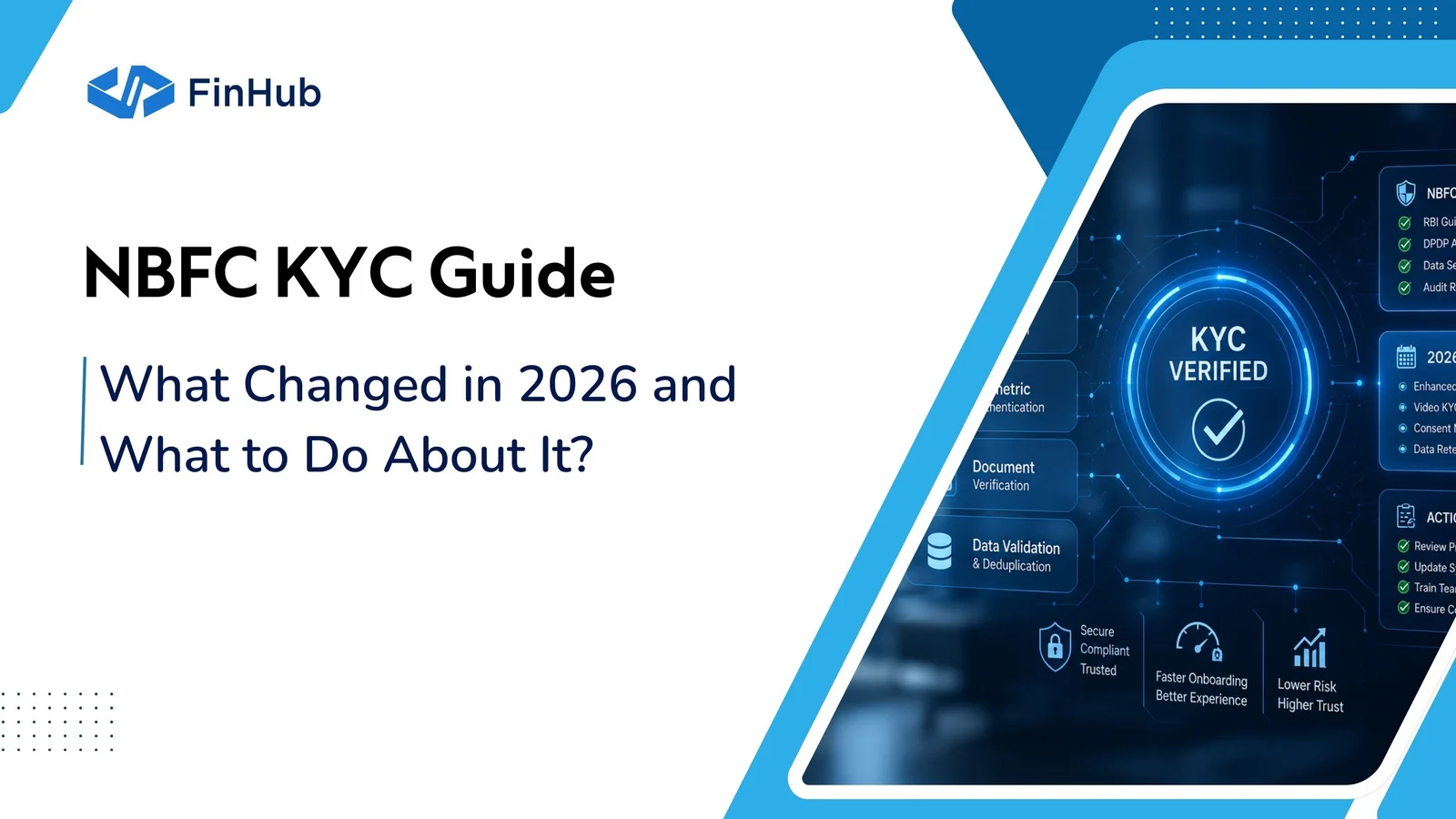
Your Best Customer Just Left Mid-Application. Here’s What Actually Scared Them Off.
For NBFCs, KYC is no longer just a compliance checkpoint. In 2026, it directly affects onboarding speed, audit readiness, customer trust, and conversion. This guide explains what changed, where onboarding drop-offs happen, and how NBFCs can choose a KYC workflow automation stack that supports regulated digital lending without slowing growth.
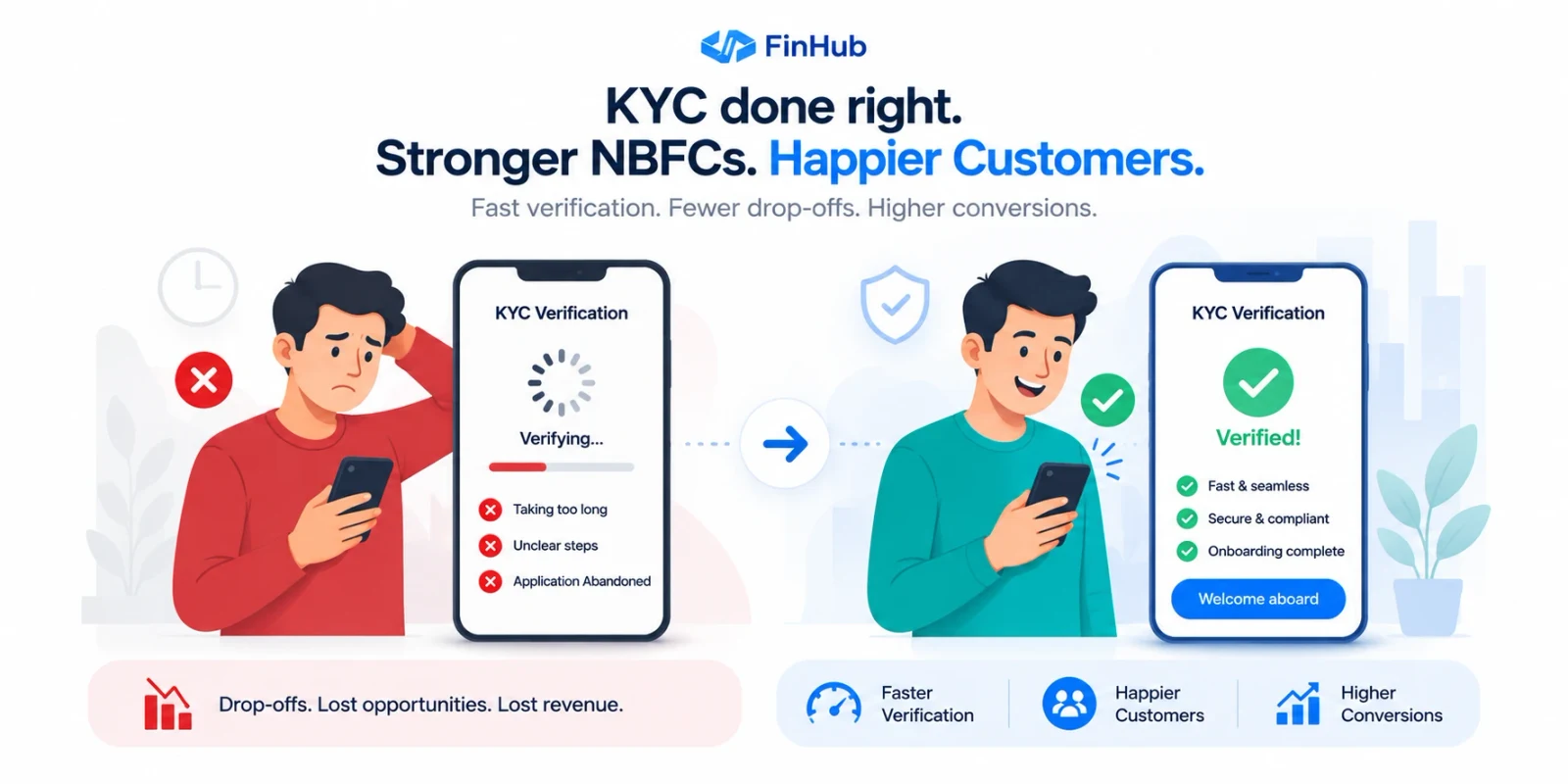
Executive Summary
- This blog is for NBFC leaders evaluating KYC, VKYC, and digital onboarding readiness in 2026.
- The business impact goes beyond compliance: slow verification creates conversion leakage, higher support load, and delayed loan disbursement.
- The right stack should combine fast identity verification, audit-ready workflows, data localization, watchlist screening, and AI-powered video verification.
- FinHub supports the broader KYC and onboarding stack, while Intelli VKYC is HabileLabs’ AI-powered video verification module for regulated onboarding journeys.
Key Takeaways
- 2026 Regulatory Shift: The Reserve Bank of India (RBI) introduced dedicated KYC Master Directions for Non-Banking Financial Companies (NBFCs), mandating strict compliance and 100% in-country data localization under the DPDP Act.
- Primary Business Risk: Clunky, slow onboarding leads to drop-offs. Sub-30-second digital verification, including AI-powered Intelli VKYC for Video KYC / V-CIP and Aadhaar e-KYC, directly drives customer acquisition and conversion rates.
- Vendor Selection Criteria: High-growth NBFCs require enterprise-grade REST APIs, pay-per-verification pricing models, and multi-OCR fallback mechanisms.
In This Guide
- What KYC means for NBFCs
- Why RBI and DPDP changes matter now
- The different types of KYC checks
- What a modern KYC stack should cover
- How to evaluate a KYC vendor
- Common questions NBFC teams ask
What Is KYC?
Before any business can let someone open an account, take a loan, or use certain services, it has to check one simple thing: is this person really who they say they are?
At its core, KYC means confirming that a customer is genuinely who they claim to be. A business verifies an identity document, confirms it is authentic, matches the person’s face to the document, and screens the customer against relevant risk and watchlist sources.
Every regulated business in India has to run these checks. What differentiates high-performing NBFCs is how efficiently they complete verification without creating unnecessary customer friction.
Why Is Everyone Suddenly Talking About KYC Right Now?
A few things changed recently that raised the stakes for every NBFC:
The rulebook got its own chapter. RBI used to lump NBFC identity checks in with everyone else's rules. Late 2025, it gave NBFCs their own dedicated rulebook. If your compliance team is still working off the old, shared version, they're reading the wrong document. (Source: RBI's NBFC-specific KYC Direction, 2025.)
Customer data now has to stay in India. If you're using any tool that stores customer information outside the country, that's a real problem now, not just a technical footnote. (Source: Digital Personal Data Protection Act rules, notified 2025.)
Penalties went up, and they're public. Businesses have been fined lakhs, sometimes crores, for identity check failures. These aren't small slip-ups anymore. They show up in audits and cost real money.
Customers expect speed. People are used to signing up for things in under a minute. If your identity check takes five minutes and feels confusing, they'll assume something's wrong and leave.
For NBFCs, the challenge is to remain compliant while reducing onboarding drop-offs, protecting customer data, and keeping digital lending journeys fast enough for modern users.
What are the key RBI KYC compliance changes for NBFCs?
Under the updated 2026 RBI framework, NBFCs face four major compliance mandates:
- NBFC-Specific Master Directions: KYC regulations are now distinct from generic banking rules, with tailored audit trails for mid-layer and upper-layer NBFCs.
- Local Data Residency (DPDP Act): All customer PII (Personally Identifiable Information), biometric templates, and document records must be processed and stored on domestic Indian servers.
- Mandatory V-CIP Automation: Video Customer Identification Processes (V-CIP) require AI-driven liveness detection, geolocation tagging, and face-matching accuracy to prevent identity spoofing.
- Automated Continuous Screening: Periodic KYC updates and real-time AML (Anti-Money Laundering) watchlist screenings (FATF, CKYC) are mandatory for high-risk loan categories.
What Are the Different Types of KYC?
Not every business needs every kind of check. Here's how it usually breaks down, so you know what actually applies to you.
Basic identity checks. Every KYC process starts here. You confirm someone's ID is real, take a live photo, and match it to their ID photo. This alone stops most fake signups before they get anywhere.
Video-based checks. For higher-value customers, a guided video verification flow confirms that the person is real, present, and matched to the submitted documents. For HabileLabs, this capability is delivered through AI-powered Intelli VKYC, built to support liveness detection, face matching, guided verification, and regulated onboarding journeys.
Repeat or refresh checks. Customers who have been with you for a while still need to be re-verified now and then, especially if something changes, like their address or business details. This is faster than checking someone from scratch since you already have most of their information.
Risk and background screening. This checks whether someone shows up on any fraud, crime, or high-risk lists before you take them on as a customer. It runs quietly in the background and only flags something when there is a real concern.
Financial and business checks. If you are lending money or working with other businesses, you might also need to verify income, bank details, or business registration, not just identity. This gives you a clearer picture of risk before you commit.
Data protection checks. Beyond confirming who someone is, you also need to make sure sensitive details like ID numbers stay hidden and stored safely, with a clear record of what was collected and why.
Registry check. Before running a fresh check on anyone, see if they already have a KYC record sitting in India's central registry, and reuse it if they do. Once you've verified someone new, that record needs to go back into the registry within about a week and a half. Miss this and it shows up in your audit.
Most NBFCs only need the first two or three. The rest depend on what you offer and how much risk comes with it.
What Should a Modern KYC Stack Cover?
You don't need every possible check for every customer. A simple signup needs speed. A higher-value customer might need a bit more care. Here's what a solid NBFC KYC stack should include, without the extra weight you don't need.
| What it checks | Why it matters |
|---|---|
| ID verification | Confirms the ID document is real and matches government records |
| Video verification | A guided video verification flow supported by AI-powered Intelli VKYC for liveness detection and face matching |
| Repeat verification | Refreshes an existing customer's details without making them start over |
| Watchlist screening | Checks the person isn't flagged for fraud or other serious issues |
| Document reading | Automatically reads details off an ID, so no one has to type it manually |
| Face matching | Confirms the live person matches the photo on their ID, not just a picture of a picture |
| Data protection | Automatically hides sensitive ID numbers so private details stay private |
| Registry Check | Confirms whether a customer already has a verified record on file elsewhere, so you're not starting from scratch |
| Recheck Targeting | Flags customers coming up for their renewal window before the deadline slips |
The goal is not to add every possible check. The goal is to design the right verification flow for each risk category, so the business improves audit readiness without increasing conversion leakage.
Step-by-Step NBFC KYC Vendor Evaluation
To improve loan disbursement speed while maintaining audit readiness, evaluate every KYC vendor across technology, compliance, customer experience, and operating flexibility.
- Test API Latency & Accuracy: Ensure PAN, Aadhaar e-KYC, and bank account penny-drop checks resolve in under 5 seconds with >99% OCR accuracy.
- Verify V-CIP & Liveness Capabilities: Confirm passive liveness detection and automated face-matching meet RBI V-CIP guidelines.
- Audit Data Security: Request ISO 27001, SOC 2 Type II, and DPDP compliance documentation for all data pipelines.
Here's how that plays out in practice:
| Typical KYC Vendor | FinHub | |
|---|---|---|
| Setup | Weeks of custom development, on their timeline | Fits your existing stack, live in days |
| Pricing | Fixed monthly minimum, whether you use it or not | Pay only for checks you actually run |
| Testing before you commit | Long sales process, limited sandbox access | Free trial with usable credits, no commitment |
| Backup if the system goes down | Signups stop until it's fixed | Failover option keeps you running |
| Support for small changes | Support ticket, multi-week wait | Direct access to the team that built it |
| Built For | Enterprise-scale players | NBFCs your size, from day one |
| Data Security | Varies by provider, often unclear | ISO 27001-aligned, data stays in India |
Why Does KYC Still Feel So Broken If the Rules Are This Clear?
Many identity verification tools were originally designed for large banks, not fast-growing NBFCs that need flexibility, faster implementation, and practical support.
When a form field, workflow, verification rule, or API response needs to change, a rigid vendor model can create weeks of delay. For NBFCs, that delay directly affects customer onboarding, internal operations, and revenue velocity.
The cost is measurable. Each additional step, slow screen, failed verification, or unclear error message increases onboarding drop-offs and creates conversion leakage before a customer reaches the loan or account activation stage.
That is why NBFCs need a stack that combines compliance, speed, resilience, and adaptability instead of treating KYC as a disconnected back-office process.
Ready to Reduce Onboarding Drop-Offs and Strengthen KYC Readiness?
Start by reviewing what is currently running behind your signup, lending, and customer verification journeys.
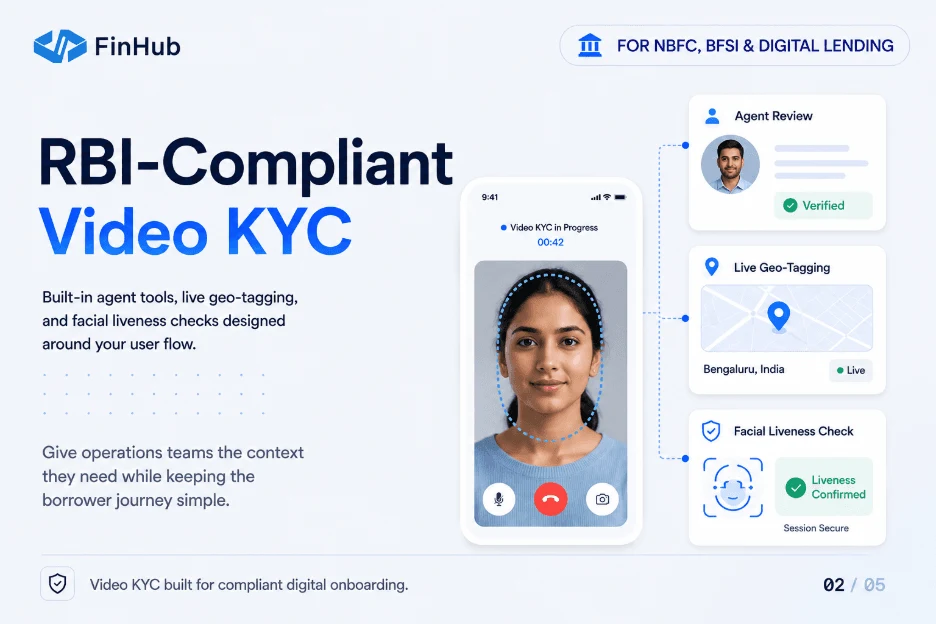
FinHub supports the broader KYC and onboarding workflow, including identity verification, watchlist screening, document reading, and integration-ready APIs. AI-powered Intelli VKYC extends this stack with guided video verification, liveness detection, and face matching for regulated onboarding journeys.
Evaluate both against your highest-risk onboarding flows before committing to a full rollout.
Explore AI-powered Intelli VKYC | Book a FinHub Demo