FinHub Compliance Desk
· 7 min read
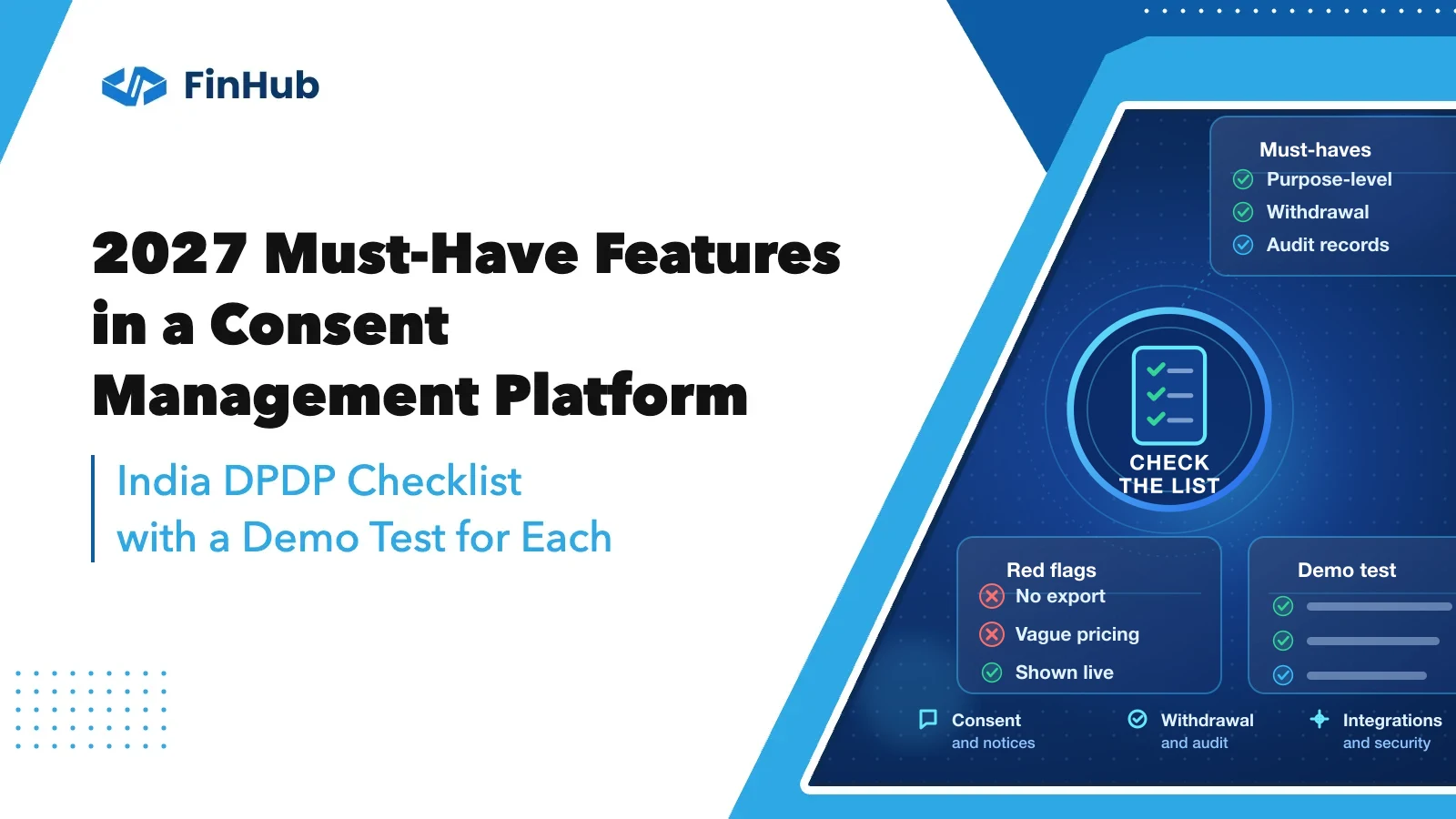
Most consent platform demos look the same for the first ten minutes: a tidy banner, a dashboard, a green tick. The differences show up later, when someone withdraws consent and nothing downstream changes. So here is a practical list. It covers the 12 things a consent management platform should do in India in 2027, and a quick test for each that you can run in a demo. If a vendor cannot show a feature live, treat it as not there.
Why 2027?
Reports on the DPDP Rules say they were notified in November 2025, with the main operational obligations applying from 13 May 2027 (some sources say 14 May). Consent Manager provisions were reported to apply from 13 November 2026, which has now passed. Advisers describe May 2027 as the date by which new consent flows, security standards and erasure mechanisms should be in place. Sources differ, so check the official notification and your counsel before you plan around a single day.
A note on method: the requirements below come from Indian legal and technical commentary, performance analyses and review sites. We did not test any vendor.
The 12 must-haves, and how to test each
| # | Must-have | Why it matters (what buyers complain about) | Demo test |
|---|---|---|---|
| 1 | Purpose-level consent | Bundled and agree-to-all consent is flagged as a top mistake and a legal risk. | Show separate purposes and no pre-ticked boxes. |
| 2 | Multilingual notices (22 scheduled languages) | A notice in a language the person cannot read is weak consent. | Open the notice in the languages your customers use. |
| 3 | Withdrawal as easy as consent | A common failure: one-click consent, email-based withdrawal. | Withdraw in the demo and count the steps. |
| 4 | Withdrawal propagation | Withdrawal is recorded but marketing or processing carries on. | Show it reaching your CRM, LOS or marketing tools. |
| 5 | Tamper-evident audit records | Audits find records missing timestamps, purposes or collection method. | Export a full history for one person. |
| 6 | Processor and third-party flows | Withdrawal has to reach your processors too. | Show a consent change sent to a partner. |
| 7 | Children's data and parental consent | Advisers recommend age verification and verifiable parental consent. | Show the configurable flow. |
| 8 | Rights-request workflow | Access, correction, erasure and grievance requests need owners and deadlines. | Run one request end to end. |
| 9 | Cookie and tracker control | Tags firing before consent is a common finding. | Use a browser tool to check that nothing fires before opt-in. |
| 10 | Performance | Independent analyses show banners can hurt LCP, INP and CLS. | Measure your pages with and without the platform, using field data. |
| 11 | APIs, SDKs and integrations | Consent that cannot reach your systems is only a record. | Review the API docs and see a live integration. |
| 12 | Security, hosting and pricing clarity | Reviews cite long implementations and renewal surprises. | Get certifications and a quote with renewal terms in writing. |
Where HabileLabs ConsentGuard fits
ConsentGuard is our DPDP consent engine for banks, NBFCs, lenders and insurers, so read this section knowing we publish this post. Here is how it lines up with the list, based on our own product pages.
| Must-have | ConsentGuard |
|---|---|
| 1. Purpose-level consent | Yes: onboarding, lending, servicing, collections, marketing and custom workflows. |
| 2. Multilingual notices | English and the 22 Eighth Schedule languages, written by you or auto-translated. |
| 3. Easy withdrawal | A customer portal to review, renew or withdraw optional purposes. Purposes retained by law stay locked and labelled. |
| 4. Withdrawal propagation | Changes are reflected across connected systems, and consent status (active, expired or withdrawn) is checked before data is processed. |
| 5. Audit records | A hash-chained audit log with timestamps, user actions and purpose details, exportable as CSV or PDF. |
| 8. Rights-request workflow | Rights requests and grievances raised in the portal, with categories, assignment, SLAs and escalation, all logged. |
| 9. Cookie and tracker control | Cookie templates and preferences with the same versioning and audit trail as customer consent. |
| 11. APIs and SDKs | APIs and SDKs for onboarding platforms, CRMs, LOS, document management and portals. |
| 6, 7, 10, 12 | Processor flows, children's data, performance and security attestations are not stated on our product pages, so ask us in a demo. |
Related: the DPDP guide, the DPDP compliance use case, pricing and security.
Which must-haves matter most for your business
- Banks, NBFCs and lenders: items 4, 5, 6 and 11 matter most, plus on-premise options if you need them. See our guide to Indian consent platforms for BFSI and lenders.
- D2C and e-commerce: items 2, 9 and 10, because tracking and page speed drive revenue.
- Apps and SaaS: items 3, 4 and 11, with SDKs for mobile and backend.
- Multinationals: check whether you need one tool across GDPR, CCPA and DPDP. A global platform such as OneTrust may suit you. See our list of Indian OneTrust alternatives.
Red flags in a demo
- They cannot show a withdrawal reaching a downstream system.
- Consent records cannot be exported.
- Notices in Indian languages are machine-translated with no review process.
- Pricing is vague and renewal caps are refused.
- They claim to be "fully compliant" and cannot explain what that means. No tool makes you compliant by itself.
A realistic 2027 timeline
- Now to December 2026: map your data, channels and purposes, and shortlist two or three vendors.
- January to February 2027: run a proof of concept on one real journey.
- March to April 2027: integrate withdrawal flows, train your teams and test audit exports.
- Before 13 May 2027: go live, document your process and keep the evidence.
Want a second pair of eyes on your shortlist? Book a ConsentGuard demo and bring your hardest journey.